
Writing academic papers in APA style can feel confusing at first, especially when you come across terms like et al. If you’ve ever wondered, “what does et al mean in APA?”, you’re not alone. This small Latin phrase appears frequently in research papers, essays, journal articles, and citations, yet many students are unsure about when and how to use it correctly.
In APA formatting, et al. is used to shorten in-text citations when a source has multiple authors. Instead of listing every author’s name each time you cite a source, APA allows writers to use et al. after the first author’s name to make citations cleaner and easier to read. Understanding this rule is essential for avoiding citation mistakes and maintaining professional academic writing.
This guide will explain the meaning of et al., how it works in APA 7th edition, when to use it, common mistakes to avoid, and examples of proper formatting. Whether you’re a college student, researcher, or beginner learning citation styles, this article will help you confidently use et al. in your academic work.
What Does Et Al. Mean in APA?
The term et al. is a shortened version of the Latin phrase “et alia,” which means “and others.” In APA style, it is used in citations to represent additional authors whose names are not fully listed in the text.
For example, if a research paper has four or more authors, APA formatting allows you to write only the first author’s last name followed by et al. instead of including every author each time you cite the source. This makes academic writing shorter, cleaner, and easier to read.
Here is a simple example:
- Full author list: Smith, Johnson, Brown, and Taylor
- APA in-text citation: (Smith et al., 2023)
In this example, et al. replaces the names of the remaining authors after Smith.
The purpose of using et al. is to simplify citations while still giving proper credit to all contributors. Academic papers often use sources with multiple authors, and writing every name repeatedly would make sentences long and difficult to follow.
It’s important to remember that et al. is mainly used in in-text citations, not always in the reference list. In the reference section, APA usually requires listing multiple authors depending on the citation guidelines.
Because APA rules have changed slightly over time, many students confuse older and newer formatting standards. In APA 7th edition, et al. is generally used for sources with three or more authors in in-text citations.
Understanding this basic meaning is the first step toward mastering APA citations correctly.
The Origin and Meaning of Et Al.
The phrase et al. comes from Latin, a language that has influenced many academic and legal terms used today. It is an abbreviation of “et alia” (neutral plural), though it can also derive from related forms like et alii or et aliae, depending on gender and context. In general usage, however, et al. simply translates to “and others.”
Historically, scholars used Latin phrases in books, research papers, and universities because Latin was considered the language of education and intellectual discussion. Even today, many Latin abbreviations remain common in academic writing, including:
- e.g. (“for example”)
- i.e. (“that is”)
- etc. (“and so on”)
- et al. (“and others”)
In APA style, et al. serves a practical purpose. Academic sources often have many authors, especially scientific studies and collaborative research projects. Listing every author repeatedly inside the text would make writing unnecessarily long and cluttered. Using et al. solves this problem by shortening citations while still acknowledging multiple contributors.
For example:
- Without et al.: (Smith, Johnson, Brown, Taylor, & Lee, 2023)
- With et al.: (Smith et al., 2023)
The second version is much cleaner and easier to read.
Another important detail is punctuation. In APA formatting:
- “et” means “and” and is not abbreviated
- “al.” is short for “alia,” so it must include a period
This is why the correct form is always written as et al.
Understanding the origin of the phrase can make it easier to remember both its meaning and proper formatting in academic writing.
When to Use Et Al. in APA Style
Knowing what et al. means is important, but understanding when to use it in APA style is even more essential. APA citation rules are designed to keep academic writing organized and readable, especially when dealing with multiple authors.
According to APA 7th edition, et al. is used in in-text citations whenever a source has three or more authors. Instead of listing every author’s last name, you only include the first author followed by et al.
Example:
A source written by:
- Smith, Johnson, Brown, and Taylor
Would appear as:
- (Smith et al., 2022)
This rule applies to both:
- Parenthetical citations
- Narrative citations
Parenthetical Citation Example
- Research supports this conclusion (Smith et al., 2022).
Narrative Citation Example
- Smith et al. (2022) found that students perform better with proper study habits.
Using et al. helps reduce repetition and makes papers easier to read. Imagine writing six or seven author names every time you cite a source it would quickly become distracting.
However, APA rules differ slightly for the reference page. In the reference list, you usually include multiple author names rather than replacing them with et al. unless the source has a very large number of authors.
It’s also important not to use et al. for sources with only one or two authors:
- One author: (Smith, 2022)
- Two authors: (Smith & Johnson, 2022)
Only sources with three or more authors use et al. in APA 7th edition in-text citations.
Understanding these rules helps students avoid common citation errors and maintain proper academic formatting.
How to Use Et Al. in In-Text Citations
In APA style, et al. is primarily used in in-text citations to simplify references with multiple authors. Learning the correct format is important because even small punctuation mistakes can affect academic accuracy.
The general APA rule is simple:
- For sources with three or more authors, write the first author’s last name followed by et al. and the publication year.
Basic Formula
First Author et al., Year\text{First Author} \; et\ al.,\ YearFirst Authoret al., Year
Example
If the authors are:
- Johnson, Lee, Carter, and Brown
The citation becomes:
- (Johnson et al., 2021)
This format applies whether the citation appears at the beginning, middle, or end of a sentence.
Narrative Citation Example
- Johnson et al. (2021) explained the importance of time management skills.
Parenthetical Citation Example
- Time management improves productivity (Johnson et al., 2021).
One common mistake students make is writing:
- Johnson and others
- Johnson et. al
- Johnson et al
These are incorrect in APA style. The proper formatting always includes:
- No period after “et”
- A period after “al.”
Correct:
- Johnson et al. (2021)
Another important rule is italicization. In APA 7th edition, et al. is usually written in standard font, not italics, unless your instructor specifically requests otherwise.
Using et al. correctly improves readability and demonstrates strong academic writing skills. Once you understand the basic pattern, applying it throughout research papers becomes much easier.
APA 7th Edition Rules for Et Al.
APA citation rules changed slightly with the release of the 7th edition, making et al. usage simpler than before. Understanding these updated rules is important because many older websites and textbooks still explain APA 6th edition formatting, which can confuse students.
Under APA 7th edition, the rule is straightforward:
- Use et al. for all in-text citations with three or more authors
This applies immediately, even the first time you cite the source.
Example
Authors:
- Walker, Thomas, Green, and Hall
Citation:
- (Walker et al., 2020)
In older APA editions, writers sometimes had to list all authors the first time a source was cited. APA 7th edition removed this requirement to make citations more consistent and easier to read.
Reference List Rules
The reference page follows different guidelines. In APA 7th edition:
- You may list up to 20 authors in a reference entry before shortening with ellipses.
This means et al. is mainly an in-text citation tool, not commonly used in the bibliography for standard sources.
Example Reference Entry
Walker, J., Thomas, R., Green, S., & Hall, P. (2020). Research methods in education. Academic Press.
Key APA 7th Edition Changes
- Easier citation formatting
- Less repetition in writing
- More reader-friendly research papers
- Consistent rules across disciplines
These updates were designed to simplify academic writing while maintaining proper author credit. Students using modern APA formatting should always follow APA 7th edition unless their instructor specifically requests another version.
Learning these updated rules helps prevent outdated formatting mistakes and ensures your citations match current academic standards.
Common Mistakes When Using Et Al. in APA
Even though et al. seems simple, many students make small formatting errors when using it in APA style. These mistakes can reduce the professionalism and accuracy of academic writing. Understanding the most common issues can help you avoid losing marks on essays and research papers.
1. Using Et Al. for Two Authors
One of the biggest mistakes is using et al. when a source has only two authors.
Incorrect:
- (Smith et al., 2022)
Correct:
- (Smith & Johnson, 2022)
APA only uses et al. for sources with three or more authors.
2. Incorrect Punctuation
Students often place punctuation incorrectly.
Incorrect:
- et. al
- et al
Correct:
- et al.
Remember:
- “et” is a complete word
- “al.” is abbreviated and requires a period
3. Listing Too Many Authors
Some writers continue listing all authors even when APA allows shortening.
Incorrect:
- (Smith, Johnson, Brown, Taylor, & Lee, 2022)
Correct:
- (Smith et al., 2022)
4. Italicizing Et Al.
Another common mistake is unnecessary italic formatting.
In APA 7th edition, et al. is generally written in regular font, not italics.
5. Forgetting the Year
Every APA in-text citation must include the publication year.
Incorrect:
- (Smith et al.)
Correct:
- (Smith et al., 2022)
6. Misusing Et Al. in References
Many students incorrectly shorten author names in the reference list. APA usually requires listing all authors up to a certain limit.
Avoiding these mistakes will make your APA citations cleaner, more accurate, and academically professional.
Examples of Et Al. in APA Citations

Examples are one of the easiest ways to understand how et al. works in APA formatting. Seeing correct citation patterns can help students apply the rules confidently in essays, research papers, and journal assignments.
Below are several common examples of et al. used correctly in APA 7th edition.
Example 1: Parenthetical Citation
A study written by:
- Adams, Clark, Johnson, and Miller
Would appear as:
- (Adams et al., 2021)
Used in a sentence:
- Online learning has increased significantly in recent years (Adams et al., 2021).
Example 2: Narrative Citation
Instead of placing the citation at the end, the authors can become part of the sentence:
- Adams et al. (2021) found that students prefer flexible learning environments.
Example 3: Multiple Citations Together
When citing more than one source:
- (Brown et al., 2020; Smith et al., 2022)
This format keeps citations organized and concise.
Example 4: Direct Quote Citation
When quoting directly, include a page number:
- (Johnson et al., 2023, p. 45)
Example sentence:
- “Academic success depends heavily on consistency” (Johnson et al., 2023, p. 45).
Example 5: Incorrect vs Correct
Incorrect:
- (Johnson and others, 2023)
Correct:
- (Johnson et al., 2023)
These examples demonstrate how et al. simplifies citations while maintaining proper academic credit. Once you practice a few times, using the format becomes much easier and more natural in APA writing.
Why Et Al. Is Important in Academic Writing
The use of et al. may seem like a small detail, but it plays a major role in academic and professional writing. Research papers often involve multiple authors, especially in scientific, medical, and collaborative studies. Without et al., citations could become extremely long and difficult to read.
One of the biggest benefits of et al. is readability. Imagine repeatedly listing five or six author names throughout a paper. The writing would quickly feel cluttered and distracting. By shortening citations, et al. keeps the focus on the content rather than long strings of names.
Example Without Et Al.
- (Johnson, Smith, Carter, Williams, Brown, & Davis, 2022)
Example With Et Al.
- (Johnson et al., 2022)
The second version is clearly cleaner and easier to follow.
Another important reason et al. matters is academic professionalism. Proper APA formatting demonstrates that a writer understands citation standards and respects scholarly conventions. Professors, editors, and researchers expect citations to follow established formatting rules.
Using et al. also helps maintain consistency across academic writing. Since APA style is widely used in psychology, education, business, and social sciences, following the correct citation structure ensures papers look polished and credible.
Additionally, et al. still gives credit to all contributors, even though only the first author’s name appears in the citation. This balance between simplicity and acknowledgment is one reason the format has become standard in academic publishing.
Overall, et al. improves clarity, saves space, supports professional writing standards, and makes research papers more reader-friendly.
Differences Between APA, MLA, and Chicago Style Usage
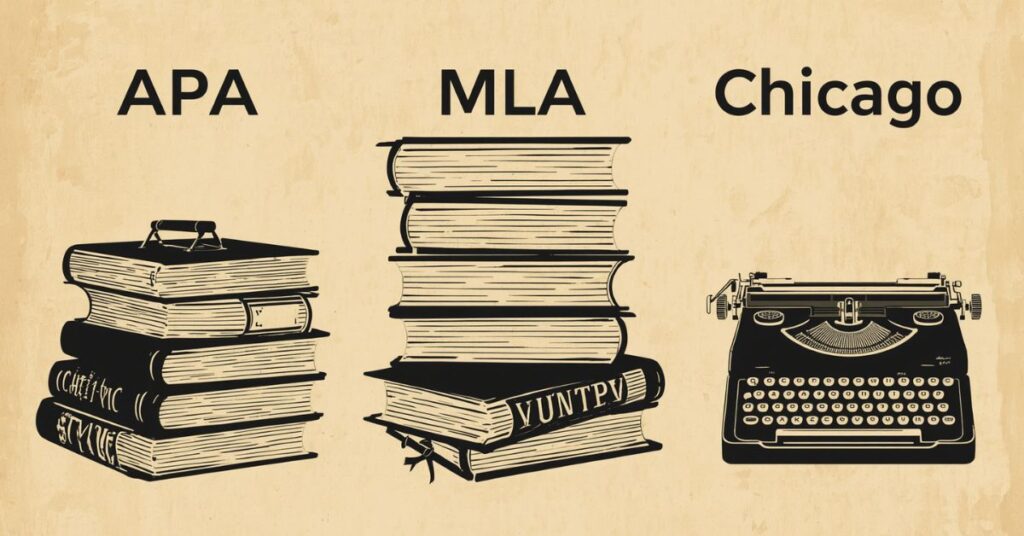
Although et al. is used in several citation styles, the rules are not exactly the same in APA, MLA, and Chicago formatting. This is why many students become confused when switching between different academic subjects or assignment requirements.
APA Style
In APA 7th edition:
- Use et al. for sources with three or more authors
- Include the first author’s last name plus et al.
Example:
- (Smith et al., 2022)
APA is commonly used in:
- Psychology
- Education
- Social sciences
- Business studies
MLA Style
MLA formatting also uses et al., but the citation structure differs slightly.
Example:
- (Smith et al. 45)
Notice:
- MLA usually does not include the publication year in in-text citations
- Page numbers are emphasized instead
MLA is mainly used in:
- Literature
- Humanities
- Language studies
Chicago Style
Chicago style has multiple citation systems, including:
- Notes and bibliography
- Author-date format
use et al. differently depending on which system is chosen.
Example:
- Smith et al. 2022, 44
Chicago style is common in:
- History
- Publishing
- Some social science fields
Why These Differences Matter
Using the wrong citation style can lead to formatting errors and lost marks in academic assignments. Even though et al. has the same basic meaning (“and others”), each style guide applies it differently.
Understanding the distinctions between APA, MLA, and Chicago helps students adapt their writing correctly depending on the subject or professor’s instructions.
Final Thoughts on What Et Al. Means in APA
Understanding what et al. means in APA is an essential part of learning academic writing and citation formatting. Although the phrase itself is short, it plays an important role in making research papers cleaner, more professional, and easier to read.
In APA style, et al. simply means “and others” and is used to shorten in-text citations for sources with three or more authors.
Instead of listing every contributor repeatedly, writers can include only the first author’s last name followed by et al. This helps maintain readability while still giving proper credit to all authors involved in the work.
Learning the correct formatting rules is important because small citation mistakes can affect the quality of academic assignments.
From punctuation and author count to APA 7th edition updates, understanding when and how to use et al. correctly can improve both accuracy and confidence in scholarly writing.
It’s also helpful to remember that APA formatting differs from MLA and Chicago styles, so students should always follow the citation guide required for their course or publication.
Overall, et al. is more than just a Latin abbreviation; it is a practical academic tool that simplifies citations and supports professional communication in research writing.
Once you understand its meaning and usage, applying it in essays, articles, and research papers becomes much easier and more natural.

I am James Carter, a writer who enjoys creativity, humor, and smart wordplay. I focus on sharing light, engaging ideas that make people smile and think. On punsprout.com, I create content that turns simple words into clever fun.